Women and the Gender Debate
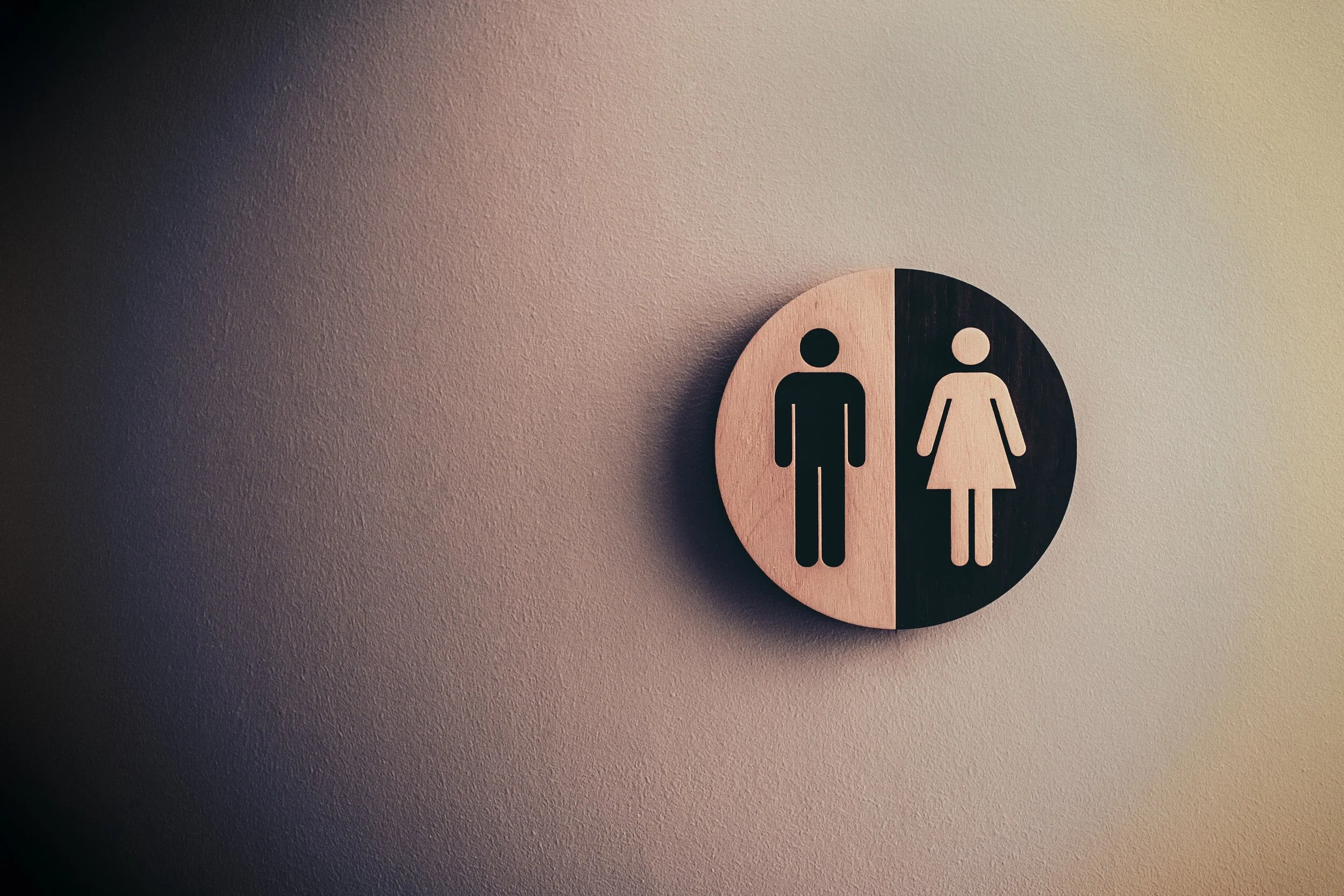
As society seeks to be ever more inclusive, some interesting concepts are taking hold in the complex debates around transsexuality and gender identity.
One is the conflation of biological sex and gender expression, which until quite recently were widely understood to be distinct but related concepts. In fact, a key tenet of early feminism consisted of pushing back against gender expectations and limitations that were routinely imposed on individuals, simply by virtue of being born biologically female. Fast forward to today, and some challenge whether there can even be a definition of what a woman or biological female is, and this is largely occurring to make way for gender self-identification. This thinking is concerning, and has already begun to permeate both the cultural and legal spheres of society.
Another observation is the ongoing pathologisation of gender non-conformity in Western society, even under the guise of ‘gender affirming’ policies that require doctors never to challenge or probe suspected gender dysphoria - the approach assumes that ‘corrective’, early, medical intervention that will assist transition to a different sex is always advisable, rather than a case-specific option for each person. In contrast, many societies around the world have historically accepted both sexual and gender non-conformity as a natural occurrence.
As complex as sex and gender can be, there appear to be two obvious truths from which meaningful and honest discussion can depart.
Firstly, the human species (as with most other mammals) is sexually dimorphic. This means that beyond differences in sexual organs, biological males and females are typically easy to identify by their secondary sexual characteristics, as well as a number of consistent physiological differences.
This dimorphism is not absolute, and it is important to also include in the discussion the minority of ‘intersex’ people (termed hermaphrodites in some societies), whose physiology at birth does not fall neatly into either category. Their prevalence has been estimated to be between 0.018% to 1.7% of the population. They have often been “assigned” one sex at birth through ‘corrective’ surgery, although this practice has steadily decreased due to the scope for error - such a decision made without the intersex child’s consent can inevitably be the wrong one, resulting in an overlapping group of transgender and intersex people that realise they would be more comfortable physically transitioning to the other sex.
Secondly, transgender and gender non-conforming people have always existed and will continue to do so. They have been documented across many societies, for example within various Asian, African and Native American communities including the Hijra in India, Khawaja Sira of Pakistan, the Muxes of Mexico, the Chibados of Angola, the Bissu of Indonesia, the Kathoey of Thailand - the list goes on. It is also worth reiterating that the modern, Western notion of transgenderism does not always directly translate to how such individuals have self-identified, or been regarded in these other societies – whilst some have indeed considered themselves to be male or female, others have been treated as a third or intermediate sex, and even lobbied to attain this legal status. Depending on the particular setting or time, however, some have still suffered from marginalisation, whilst others have enjoyed special, cultural status. In some cases, it is a bit of both – for example, the Hijra of India are frequently invited to provide blessings at weddings and other ceremonies, yet in some states in India still live in relative poverty and often resort to prostitution due to family abandonment and work discrimination.
Interestingly, much of the marginalisation of transgender people in recent history stems from the spread of colonial values and/or religion to societies that were relatively more accepting, tolerant or simply indifferent to non-conformity. The criminalisation of homosexuality (up to the death penalty) frequently mirrored the penal codes of the European countries, and was often accompanied by discriminatory treatment of transsexual or non-conforming people in colonies. It is also unhelpful that both homosexuality and gender dysmorphia have been categorised as mental disorders in the West - fortunately homosexuality stopped being so some decades ago, whilst gender dysphoria only recently ceased to be considered as a mental disorder by the World Health Organisation in 2019.
In many Islamic majority countries, homosexuality is still punishable by death, although the picture interestingly differs on trans rights depending on the specific society: for example, Iran firmly acknowledges an individual’s ability to transition to the opposite sex, although many homosexual Iranians feel pressured to take this route in order to avoid harsh discrimination, including death.
Why Biological Sex Still Matters
Even after factoring in differing prevalence, it is extremely interesting that the trans debate so often focuses on who can and cannot be termed a woman, lest we forget that a large number of transmen also exist. I can only speculate as to why but the renegotiation of sex and gender identity seems much more timid to take on male norms, language and spaces. In any case, the historic subjugation of biological women across the world undoubtedly plays a large part into what some might consider the defensiveness of ‘cis’ women.
Womanhood is not, and should not, be defined by oppression and there are also practical reasons for continuing to be precise about biological sex, such as health and medical needs. Equality of women has also come a long way and I like to celebrate the progress that has enabled me to live a life full of opportunity and dignity. Nevertheless, the truth is that men are, on average, physically larger and stronger than women – it is likely one of the reasons we hardly ever discuss the impact of transmen in men’s sports. In patriarchal societies, men have also dominated cultural, economic and political life. Whilst many of these disparities have levelled out towards more egalitarianism, it is acutely clear that this is not the case around the world. For millions of women, female biological sex still has direct bearing on life prospects from an early age, in terms of infanticide, female genital mutilation, access (or not) to education, economic opportunities, and inheritance rights. How do we target these ills and further the advancement of this part of the population, if the concept of a woman is rendered subjective?
Against this backdrop, there is a remarkable misogyny that seeks to silence and immediately deem as hateful, biological women’s views on the societal changes - legal, linguistic, physical - that are being contemplated to ensure trans and non-binary people can also live with dignity and opportunity.
The estimated prevalence of transgender individuals (based on people with gender dysphoria) varies depending on the particular study, but the oft-cited numbers of the American Psychiatric Association are 0.005–0.014% of the population of biological males and 0.002–0.003% of biological females. Such numbers cannot justify the perceived threat felt by some biological women but equally, they certainly do not justify the current attempt to obfuscate the reality of the female sex.
A key point of contention then is whether one should be able to identify as a woman based on personal conviction alone, or on identifiable, biological factors. The former would be a significant scientific and cultural step, and would interestingly reignite the debate about what constitutes womanhood outside (or in spite of) biological sex - a discussion that runs counter to much of what feminism has strived for. In turn, some studies of transgender individuals have observed that their brains are often more similar to those of the sex they identify with, with the difference being attributed to the hormonal development phase of a fetus. This might be anathema to those that believe there is no difference between male and female brains, but the findings seem credible without suggesting any intellectual superiority of one sex over another. However, science is fallible and is particularly underdeveloped in this area, so it is questionable whether it is reasonable, or ethical, to rely on it to determine who is transgender or not.
The Importance of Language
Affirming individuals’ gender self-identification places a particular emphasis on the use of pronouns to avoid misgendering people. This is not only the case for trans activism, but equally applies to the movement for gender fluidity. As a result, whereas the pronouns of he, him, she and her, may have previously been understood to refer to biological sex, this would no longer be the case and would essentially result in the erasure of sex from language. However, if the developing use of terminology is actually more centred around gender expression, it would appear that a certain category of language should be created, rather than erased – one that has more to do with notions of femininity and masculinity, than the biological facts of male and female sex.
Some argue that this ‘liberating’ approach which minimalises the importance of biological sex, could also liberate biological women from the discrimination that they often face from a young age due to their anatomy. Whilst I think this might potentially be practicable in societies where women’s rights are most advanced, it seems only a theoretical and unrealistic outcome in much of the rest of the world.
At its best, gender self-identification fosters a respectful attitude of referring to the minority of transsexual and gender non-conforming people, by the pronouns that best reflect them, or that they are most comfortable with. At its worst, it introduces ‘neutral’ language such as “birthing people” or “people with vaginas”, to describe the majority of biological females that identify as women. Humorously, these descriptions align most with what particularly misogynistic societies have found women useful for – in periods of Ancient Greece for example, women were primarily thought of as ‘vessels’ for procreation. After so much progress, coming full circle back to such language does not seem like something to be celebrated.
An Honest Conversation
The choice of wording in balancing the rights of the minority and majority may be uncomfortable, but it is deliberate given that it is precisely what is occurring. A prime example is access to women’s sports, where exclusion of a transwoman directly impacts the freedom to compete in her choice of sport, but inclusion would entail biological females competing against transwomen that often have biological advantages (particularly if they have undergone male puberty) that include larger bone density, greater muscle mass, bigger lungs and heart capacity and more fast-twitch muscle fibres. Either we acknowledge these uncomfortable truths, or disingenuously pretend that physical ability between men and women can be ‘equalized’ based on testosterone levels alone, as many sporting institutions currently do.
Within and beyond sports, genuine debate may still be had on whether or how physical differences should be regarded, in order to ensure the rights of transgender and gender non-conforming people. However, it is the pretense altogether that certain differences or advantages do not exist, or are not material, that is the most baffling. If only future debate could be more intellectually honest, it is likely to be much less combative, and might even lead to actual social progress.