Defending Freedom of Speech: On Censorship and Modern Heresy
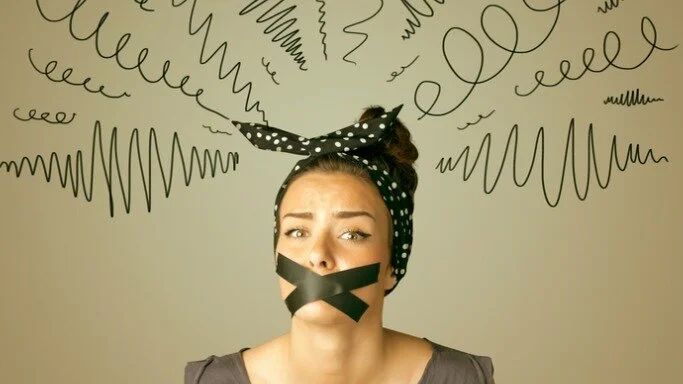
© Photo courtesy of Independent Women’s Forum
What is your view on censorship? Do you think it is merited in some circumstances? Or are you a staunch defender of the absolute right of freedom of speech, in spite of how unsavoury the content might be? What was once an essential liberty is becoming increasingly conditional, which is deeply concerning, and a step backwards for society.
Over the past two years, censorship of what we can and cannot say has creeped slowly into various aspects of life. Initially, it largely affected discussions around race, sexual orientation and gender. This seemed geared towards protecting groups that had faced much discrimination in the past, a noble cause in itself that few would disagree with. Increasingly, however, it has significantly diminished our ability to have important discussions that need to be had, or in many cases to apply common sense and call out irrational conclusions or behaviour when we see them.
Those who support this development seem to forget that the democracies many of us are fortunate to live in, were founded on freedom of expression - inevitably including the right to offend.
Cancel Culture
Across society, individuals are increasingly censured for voicing their opinions, often resulting in the now familiar “cancelling”, which might even involve the loss of one’s livelihood. A popular counter-argument some provide is that words have consequences, and losing your career or public standing just might be one of them. However, it is arguable that words also had consequences a mere two or three years ago, yet such swift and harsh punishment as occurs today, was not so commonplace. Whats more, the devil is in the nuance and there is a stark difference between spreading hate speech (frowned upon and even illegal in many countries) and being able to have a different opinion on culture, politics or religion, which is every individual’s right.
The Church of Progressiveness
The closest analogy I could make for some of this behaviour is to the notion of heresy, as has been successfully implemented by the church and other religions. There are strong parallels to how current factions of society attempt to wield some sort of silencing power: in particular the idea that certain things cannot be criticised or opposed, irrespective of the merit or rationale in doing so. We must simply take them to be true, in spite of any evidence to the contrary, and the consequences for not adhering to the doctrine, or supporting an opposing one, can be devastating. So can be challenges, no matter how well-meaning, to just some aspects of the currently-pushed narratives on gender identity, race relations, politics or even climate change policy. It’s best just to not go there.
Even better, one should publicly profess or signal their allegiance to the prevailing ideas in order to gain some kind of social safety or acceptance, even if one might only half believe what they are claiming to support.
Many commentators have suggested that the decline of religious belief in society has left a vacuum for the fervent support of other causes, and on this point they would appear to be right.
Another interesting aspect of this phenomenon is how quickly, once an idea has taken root, overzealous citizens start to monitor each other’s adherence to the doctrine. Such behaviour is not uncommon and just one alarming example I have witnessed is that of users of social media threatening to contact the employers of others, for simply expressing their views (views that ranged from the benign, to some that I personally might not have agreed with but would not think to report someone over).
It all begs the question what kind of society we are moving towards, and is reminiscent of repressive regimes we would all rather forget. Nascent trends in the US election fallout, point to further worrying behaviour that does not seem to belong in 21st century democracies, no matter how deep political enmity has been.
The Age of Disinformation and Conspiracy Theories
Lately, restrictions on speech have gained momentum, whilst also morphing to address the issue of misinformation, particularly in light of Covid-19 and alleged instances of political disinformation. Here, we can all agree that the stakes are particularly high if false information is absorbed by a significant percentage of the population. There is the question, however, about where the line is drawn on what disinformation actually is, and who should draw the line, as censorship is increasingly applied to even the most qualified individuals who, for example, might seek to opine on the science or public policy of Covid-19.
In the not too distant past, when the current modes of communication already existed, we seemed content to rely on our collective sense of morality and conscience, coupled with our belief in rationality and science, as strong filters of information. Not entities who would undoubtedly wield too much power if we permit them to become the modern day arbiters, or “fact-checkers”, of the truth. Indeed, there is something almost Orwellian about the notion of independent fact-checkers and given ongoing developments, it is no surprise that the novel nineteen eighty-four has been referenced so often in the past year.
Nevertheless, we seem to be charging on in letting others sift through information before the fragile, undiscerning public can see it. In my view, we should rather be strengthening other factors - in particular transparency and the public’s trust in institutions and veritable news sources - so that we can successfully counter, rather than stifle information. Given their social function, an individual is likely to hold journalists and the press to a much higher standard than she would a fellow layman, and it seems in our best interests to focus on ensuring that standard is met. In particular, there seems to be a lack of trust in more established outlets, often caused by learning of important suppressed or unreported news events, that is driving people to sources they might not even have known existed just some months ago.
Some might still argue that considerable public harm, and the rise of repressive governments in the past, were enabled by unchecked lies and propaganda, and that we therefore have a moral obligation to act to prevent this. However, the contrary appears to be the case in almost every example I can think of - overwhelmingly, it seems suppression only became possible when the power to control narratives became concentrated in the hands of a few.
It also seems important to take stock of what is both desirable, or even possible, in relation to free speech and the fight against disinformation. There will always be people who say things we disagree with, those who go even further and say reprehensible things, and unfortunately, disinformation capable of influencing others. However, the search for some sort of information utopia seems likely to cause far greater harm, than the unavoidable downsides associated with promoting free speech.
The Silencing of Donald Trump
Discussing censorship at this moment wouldn’t be complete without addressing Donald Trump, who was recently taken off both Twitter and Facebook permanently, following the breach of the US Congress at Capitol Hill on January 6. Both platforms based their actions on the notion that Trump had incited his supporters to commit this act, and the need to prevent further rhetoric capable of having a similar effect.
Even German Chancellor Angela Merkel recently recognised what a dangerous precedent such censorship can set, describing it as a “problematic breach” of “the fundamental right to free speech”. In addition, she proposed the US should rather adopt incitement laws as Germany has done. I strongly agree (given everything written above!) and have been reassured to see supporters and detractors of Trump alike, concerned by such actions, given the fact that one never knows how they may be deployed in the future. In other news, Twitter has since released an amusing statement on the importance of free speech, as relates to the Ugandan elections.
Parler, a Pariah
What is almost as interesting, however, is what has become of Parler, a newer social media company regarded as a rival to Twitter. It had attracted a significant number of conservative and right-leaning users, spurred in part by claims of censorship on other platforms. Since January 6, it has been targeted in the US under the guise of preventing incitement in the lead up to the inauguration ceremony, with claims that several users on the platform had expressed threatening or violent views.
The platform grew exponentially in just a few days, following Twitter’s and Facebook’s actions against Donald Trump, and the demand was that Parler moderate its platform beyond its existing community guidelines - something that seems contrary to its self-proclaimed business model of being a free-speech platform or ‘town square’. On January 7, Parler’s CEO, John Matze, had a very interesting (and somewhat contentious) interview on a New York Times podcast, which gives some insight into the platform.
Since the Capitol Hill breach, the Parler application has been taken down from the Google Play app store and Apple subsequently threathened to do the same, if Parler did not ramp up its moderation of its users. However, this threat became moot when Amazon, which hosted the Parler website on its servers, unilaterally took the platform off the internet altogether on Sunday night. It should sink in that all of this took place in the space of less than one week, before any formal investigations had actually implicated Parler in the Capitol Hill events. Parler has since sued Amazon for cutting its services on the basis of ‘political animus’, and the outcome is pending.
We Need to Defend Free Speech
As mentioned in the New Year’s wish list, in an open society good ideas routinely show up bad ones in free debate. Whatever the real motivations of censorship (ranging from the protection of people, to outright manipulation) those who support it seem to have lost faith in society’s ability to think and reason for itself. In some instances, it may be this very ability of ours that prompts some with less noble motivations, to funnel the information available to us so we do not think and reason, precisely when we ought to be doing so.
As more and more topics become off-limits, this will leave considerable scope for others to create narratives or agendas more suitable to their own ends, rather than those of wider society. In this vein, we should be wary of seemingly reasonable, and even noble aims, being used as an excuse to suppress what is probably the most essential liberty in a democracy. Thankfully, as this trend of silencing appears to be gaining steam, more and more individuals from all quarters seem to be onboard with defending truly free speech, even when they strongly disagree with what might be said!